
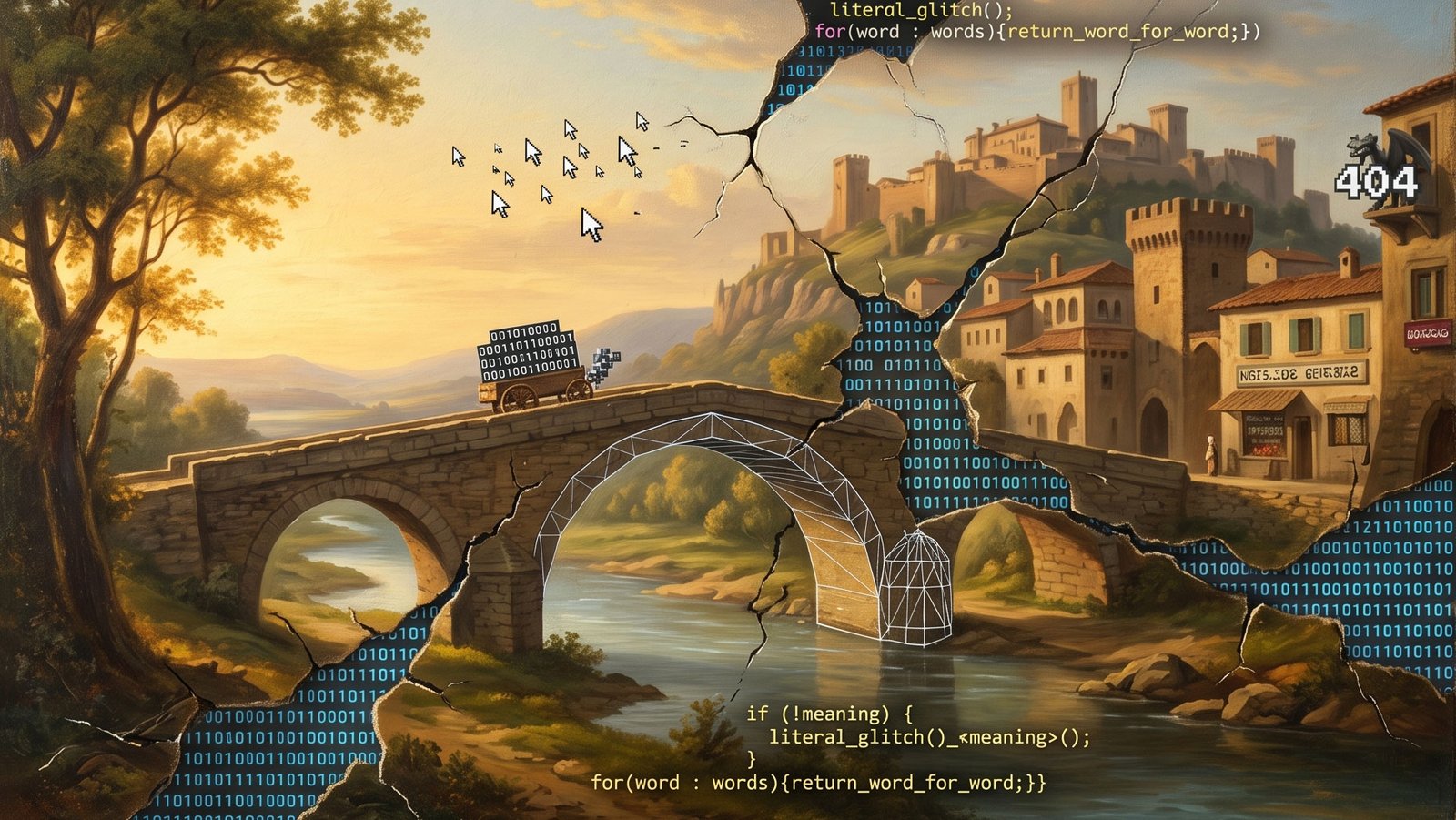
More than 25 years ago, when I first started out as a rookie translator – long before things like ISO quality certification or ISO post-editing certification were on the firm’s radar – one of the original partners gave me an invaluable piece of advice.
“We should aim to improve on the original. In some ways, the work of a translator is like that of a portraitist. If a portrait painter wants to stay in business
they will not hold up a mirror to the sitter – warts and all.”
In their experience, a translation that subtly corrected the blemishes in the source text would usually be better received than one that unthinkingly reproduces any issues. And, to this day, we continue to do exactly that in various ways – including adding comments and providing suggestions when the target text requires additional explanation and so on. The outcome is the same a quarter of a century down the line: better texts that are a cut above.
AI struggles with authenticity
What our kind of clients want is texts that, transposed into their own cultural context, are faithful equivalents of the original, but read like authentic target language material in their tone and terminology. For instance, a translation of an investment analysis should read like the genuine article, put out in English by a UK or US bank.
And that is something that AI struggles with. Even in the hands of the most accomplished prompt engineer, the finished product tends to veer between slavish adherence to the original and outright hallucinations. Neither of which is helpful. And in the first scenario, the crawlers instantly identify the translation as AI, which is definitely not good for the search rankings.
With an estimated 50% of the internet now believed to be accounted for by AI slop*, there’s a real danger that people will simply stop reading content and lose trust in the companies publishing as these artificial, unnatural texts erode credibility.
Aiming for the real deal
So where does that leave us in this brave new world? Well, Fox Coffey still has that all-important edge when it comes to quality. A great example of how the more things change, the more they stay the same.
Even so, it can be helpful to think of AI as a resourceful grad student. But one that needs close supervision. And, running out of content to mine, it is already coming close to hitting that dreaded data wall**. Ultimately, you can be as good as prompting as you like (and we really are good), but the real art of translation, storytelling and copywriting is to turn that 80%-of-the-way-there effort into the real deal. And that’s where we enter the picture as experts with more than 25 years of experience under our belts.
Contact us for a quote, examples of our work, or to find out how tried-and-tested language professionals can elevate your texts to the next level in this new era.
For the record: this text was not written using AI.
Footnotes
*https://tech.yahoo.com/ai/articles/over-50-percent-internet-now-211321253.html
