
There’s a simple equation that is gaining traction in pretty much every industry out there.
It goes like this: U + AI = P
– where U represents a user, AI represents artificial intelligence tools and P represents the skill level of a professional.
On a superficial level, our inner mathematician knows that it stacks up just fine. But are we really getting professional results if we simply knock up a couple of prompts, turn AI loose and take whatever it says at face value?
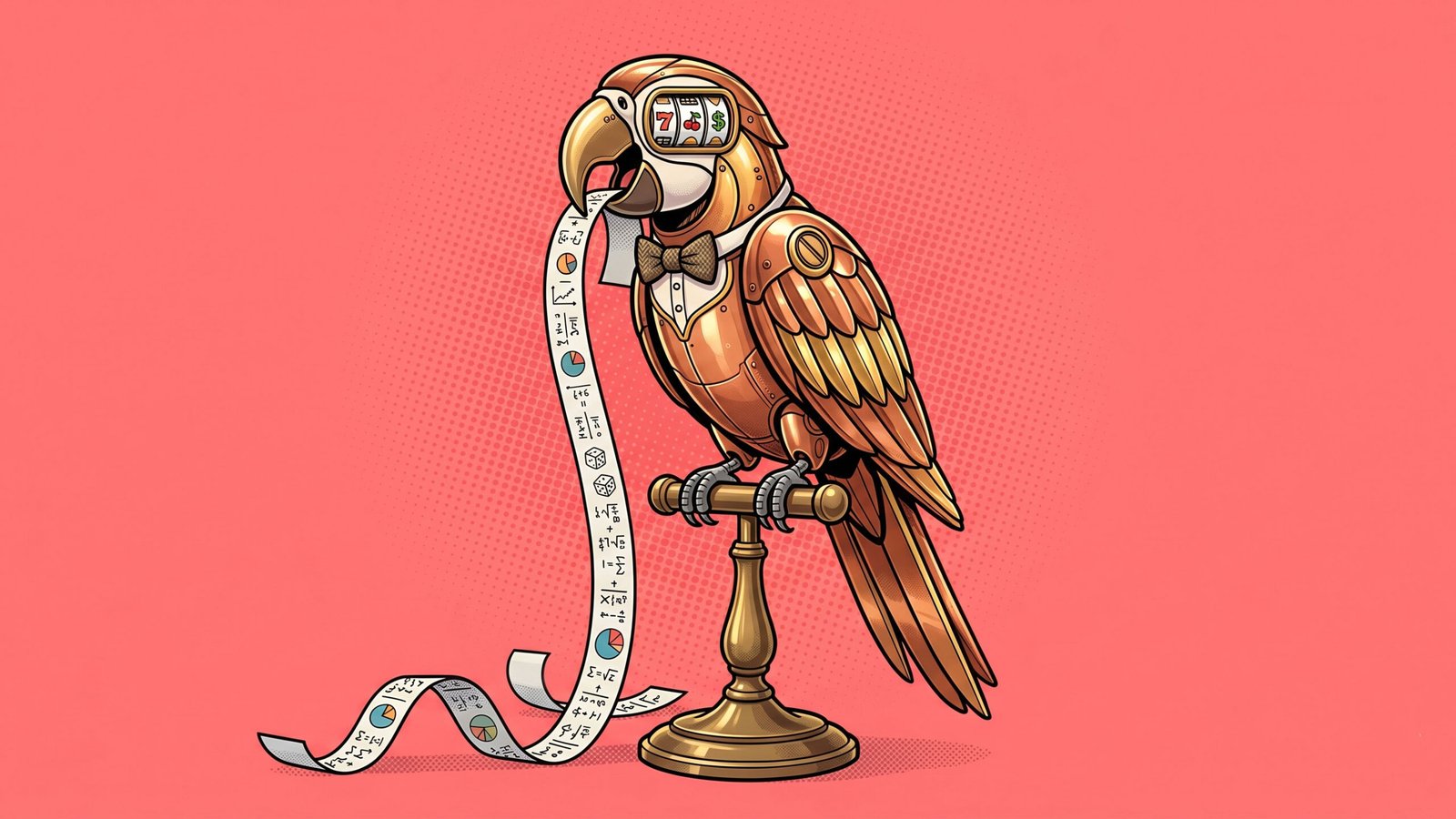
Large language models (like Gemini, ChatGPT, Grok and Copilot) aren’t actually “intelligent” in the way that we traditionally understand intelligence. They are stochastic* prediction machines. Put somewhat unkindly, they’re glorified parrots that use complex probability-based algorithms to guess the next word in a sequence** based on patterns they’ve copied from human data.
But now that the virgin ground of human-validated texts has been scraped bare, is AI starting to cannibalise itself? By posting unchecked AI content, unskilled users are now validating unvalidated AI content. And so the cycle continues. Without intervention from real experts who know what’s accurate and what isn’t, this could lead to something called model collapse. Another, more vivid description is the ouroboros effect (picture a snake eating its own tail).
A big piece of the puzzle is missing
You can still be a big AI-fan, and accept that its seductive, surface-level plausibility should be a big cause for concern. And especially now, given that well-meaning humans have re-entered the frame and started unthinkingly reproducing everything it says. We’re starting to witness a dangerous trifecta: besides reinforcement of errors, there’s a creeping loss of diversity and a slow drift from reality. Scratch the shiny surface and its limitations start to appear.
As users, people everywhere need to keep asking themselves whether their inner mathematician is stopping them from zooming out and looking at the bigger picture. AI helps us, it makes us faster, it does the donkey work. But there’s a big piece of the puzzle that’s missing. What if everything becomes so generic that people stop engaging, false premises slip the net or output is distorted by hallucination?
One BBC study found that over half of all summaries of BBC News articles generated using publicly available AI assistants contained “significant issues of some form”***. Who reviewed the AI responses? BBC journalists with a proven track record. We all like to think we wouldn’t be caught out by a dodgy reader’s digest. Ultimately though, we probably don’t have the expertise to catch everything.
So, does U + AI really add up to P? In the interests of fairness I asked Grok a (slightly leading) question to see what it ‘thought’: “why is deprofessionalisation a concern as people are turning to AI where they would previously have gone to, say, a translator?” Its answer was like music to my ears, confirming exactly what any [quality-focused language service provider] would want to hear: “convenience now risks lower standards, fewer experts, and bigger mistakes later.”
Maybe AI has a confirmation bias**** problem, too!
* https://en.wikipedia.org/wiki/Stochastic_parrot
** https://ig.ft.com/generative-ai/
*** https://www.bbc.com/mediacentre/2025/bbc-research-shows-issues-with-answers-from-artificial-intelligence-assistants
Full report:
https://www.bbc.co.uk/aboutthebbc/documents/bbc-research-into-ai-assistants.pdf
**** https://www.economist.com/united-states/2025/12/02/ais-could-turn-opinion-polls-into-gibberish
